
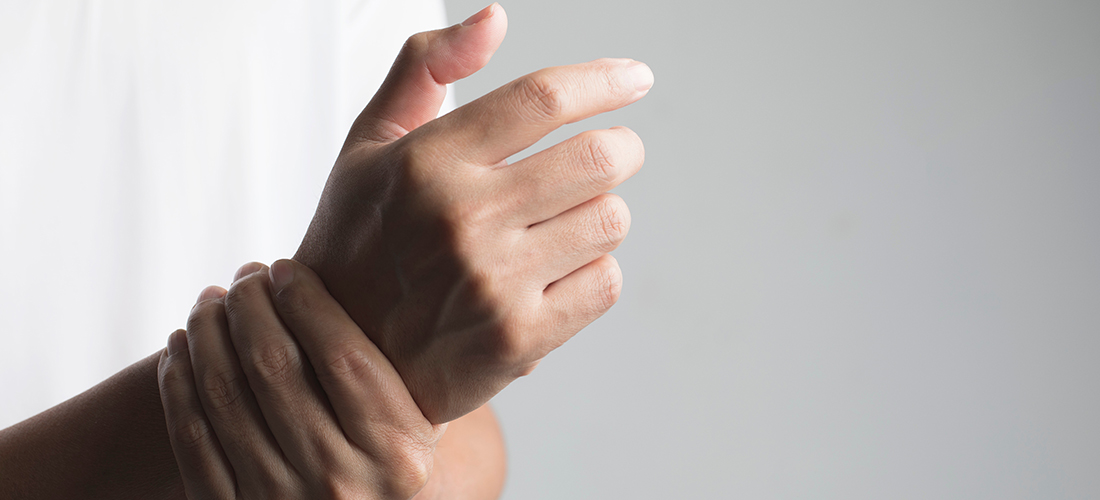
Peripheral Nerves
Nerves are responsible for functions like sensation and motor function. At the Cognito Neuro-Science Institute, we use powerful technologies like electromyograms (a test to check how your nerves react to nerve stimulation) and magnetic resonance neurography to get a good picture of your nerves so that we can offer the best solutions to your pains and injuries.
See below for some examples of how we can help.
Carpal Tunnel Syndrome
Carpal Tunnel Syndrome (CTS) is a hand condition that happens when the median nerve gets pinched as it goes through the carpal tunnel, an opening in the wrist between the carpal bones at the bottom of the wrist and a ligament across the top of the wrist. Symptoms include tingling, pain, numbness or weakness in the thumb and fingers.
Dr Jokonya may recommend surgery to ease compression on the affected nerves. You may just need some ergonomic worksite changes, a splint on your hand, or anti-inflammatory medication.
Come see our highly qualified doctors at Cognito Neuroscience Institute to see how we can help you move your hands with grace again.
Ulnar Neuropathy
This condition happens when the ulnar nerve (that runs from the shoulder, down the arm, and to the hand) gets pinched at the wrist or elbow. A compromised ulnar nerve causes pain, numbness, and tingling in the forearm, hand and or the fourth and fifth fingers. Severe ulnar nerve entrapment causes weakness in the hand or even loss of muscle mass.
Treatment for ulnar neuropathy may need surgery to decompress the nerve but can be treated with occupational therapy, anti-inflammatory medication, and splints.
Common Peroneal Nerve Syndrome
The peroneal nerve runs from the top of your glutes down to the knee and wraps around the front of the leg to the toes.
If it gets injured, you may experience a tingling sensation, pain, or weakness in your lower legs or feet or not be able to point your toes or move your foot. A more severe injury makes walking difficult and causes a change in gait called a foot drop. It can get hurt from knee, ankle, or leg injuries, or the nerve can be compressed somehow.
We can help you correct this condition with physical therapy, splints, or surgery to repair or release pressure on the nerve or replace a deteriorated nerve.
Peripheral Nerve Tumours
Peripheral nerves control the muscles that allow you to do things like walk, blink, swallow, and pick things up. Peripheral nerve tumours are growths that occur in or close to nerves—they can impair the signals that nerves send from the brain to the rest of the body, causing issues like pain, numbness, loss of balance, swelling or lumps under the skin, or weakness in affected areas.
Usually, we’ll recommend surgery to treat them, removing the growth and damaged tissue.